Loading page…
Documentation/Guide
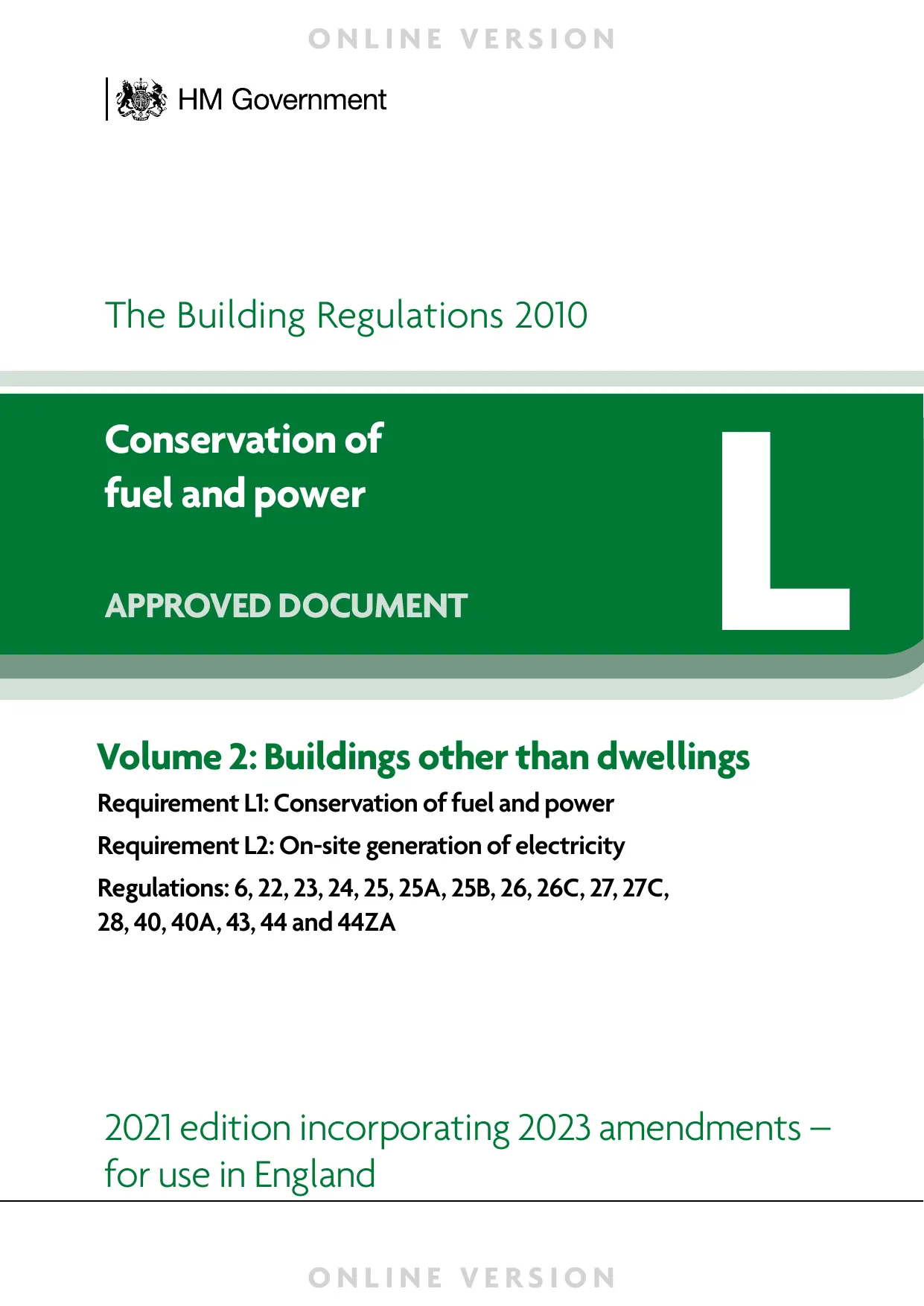
Approved Document L: Conservation of Fuel and Power — Volume 2
by Christopher Curate
About this asset
This statutory guidance document provides the essential compliance criteria for fuel and power conservation in non-domestic buildings. Presented as a standard PDF document, this publication outlines the essential requirements for building energy efficiency in England. It specifically addresses the performance of structures other than dwellings, detailing the statutory obligations regarding on-site electricity generation and thermal conservation. The document is structured to provide clear regulatory directives, including specific requirements for L1 and L2, alongside a comprehensive list of relevant regulations. Its layout is consistent with official government technical publications, providing architects and engineers with the necessary framework to ensure projects meet the current legal standards for energy conservation and environmental performance.
The download is a 1.4 MB file containing .PDF files.
Professionals integrate this document into their project workflow as a primary reference for design development and compliance checking. It is typically accessed during the early design and technical design stages to inform material specifications, building envelope performance, and MEP system integration. By referencing these requirements, designers ensure that calculations and building fabric choices align with national energy standards, facilitating the necessary approvals during the building control process and ensuring that all project documentation remains compliant with the latest legislative amendments.