Loading page…
Material Definition
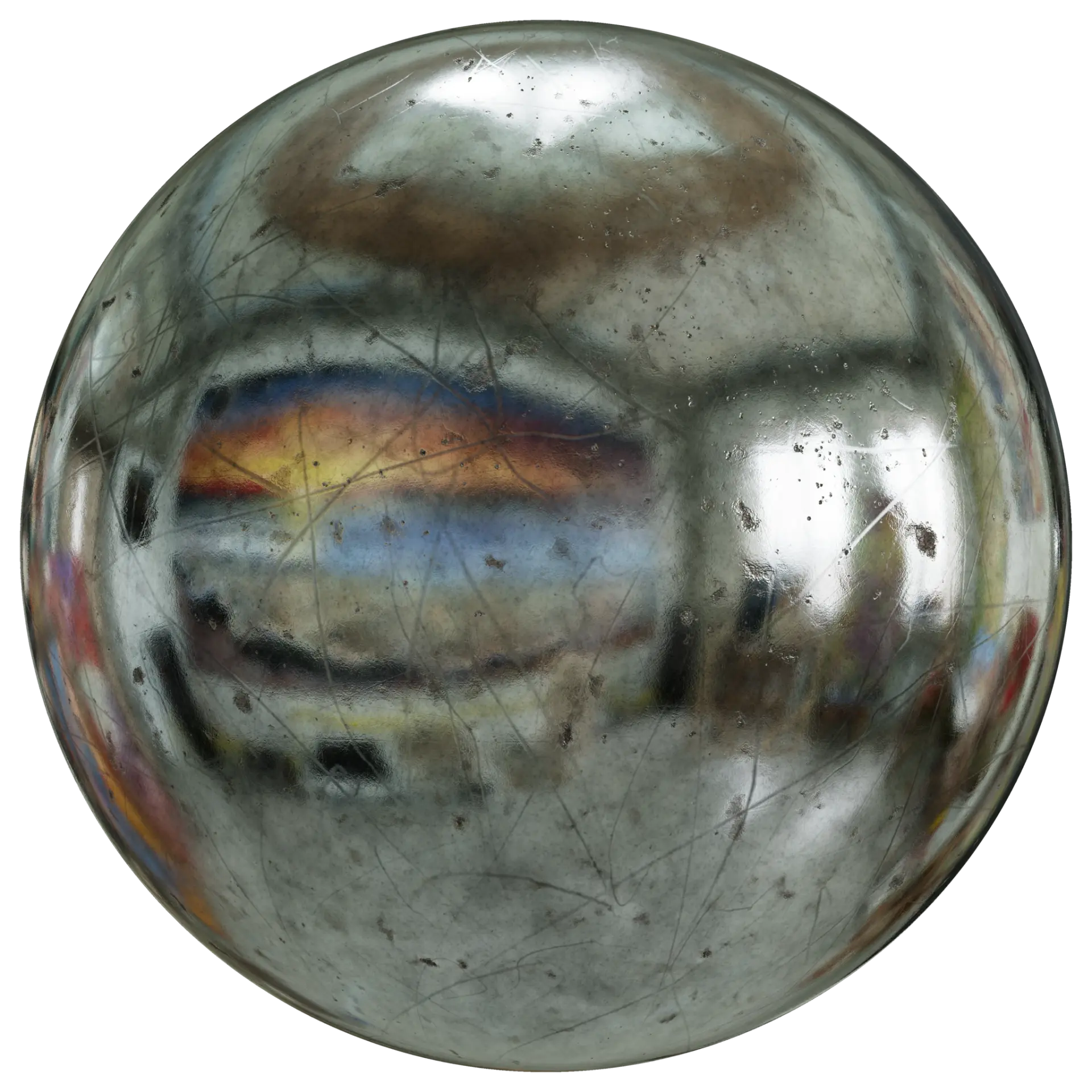
Scratched Silver Mirror PBR Material
by Yin Wai Au
About this asset
This seamless 2K PBR material features a heavily scratched silver mirror finish suitable for realistic architectural rendering. This PBR material replicates the appearance of an aged, distressed silver mirror with significant surface wear. The texture is defined by a dense network of fine scratches, abrasions, and minor oxidation spots that break up the highly reflective surface. It provides a authentic, industrial aesthetic, balancing high-specular reflectivity with realistic surface imperfections. The set includes essential maps—albedo, displacement, normal, roughness, and metalness—to ensure accurate lighting interactions and physical depth in a 3D environment. Its appearance is consistent across both flat and curved surfaces, making it highly versatile for various interior design applications.
The download is a 14.3 MB compressed archive with the texture set at 2K with colour, normal, roughness, metalness and displacement maps, ready for any metal/roughness PBR workflow in Blender, 3ds Max, SketchUp, Unreal Engine or D5.
Professionals can integrate this material into any standard PBR rendering pipeline by plugging the provided maps into the corresponding material slots. The displacement and normal maps work together to define the surface detail without requiring additional geometry. Because the texture is fully tileable, it can be applied to large wall panels or decorative elements without visible seams. Users should adjust the roughness and metalness parameters in their shader editor to fine-tune the intensity of the reflections based on the scene lighting.